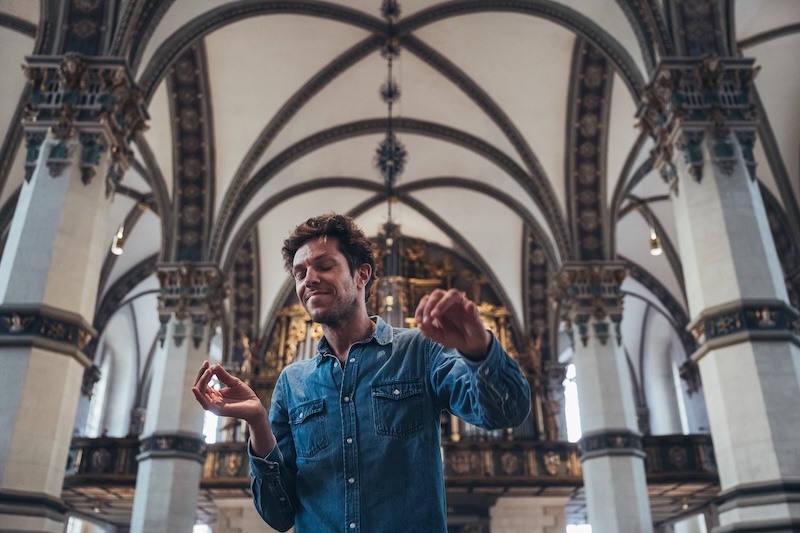
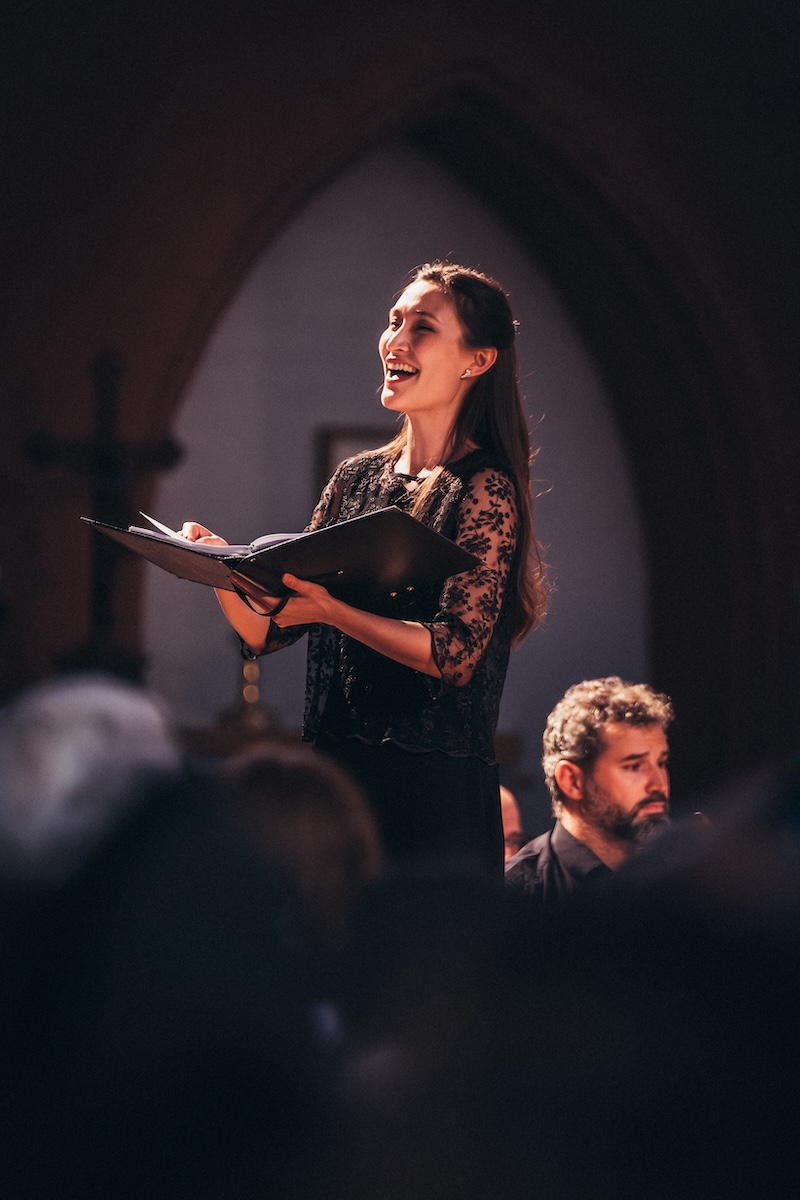
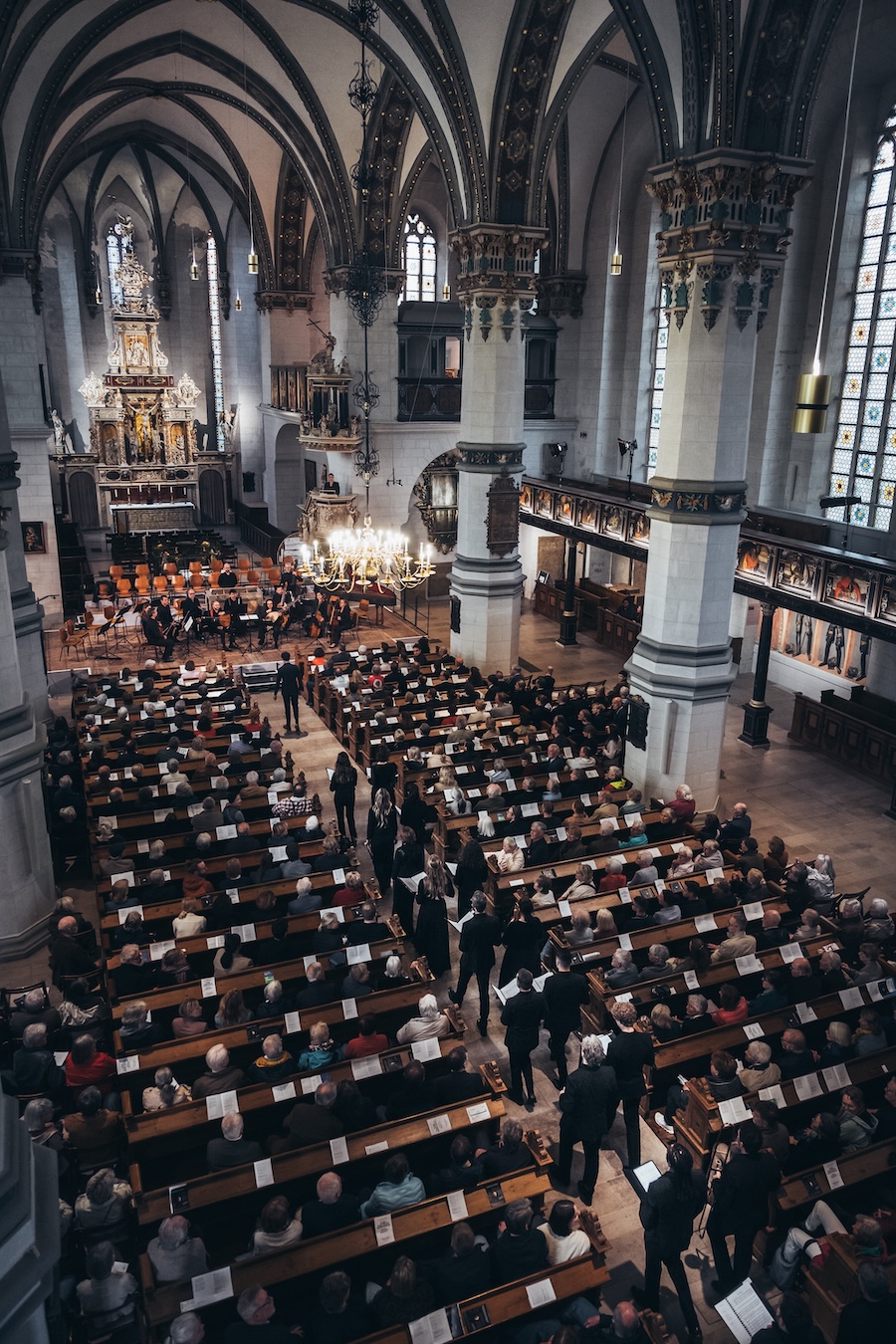
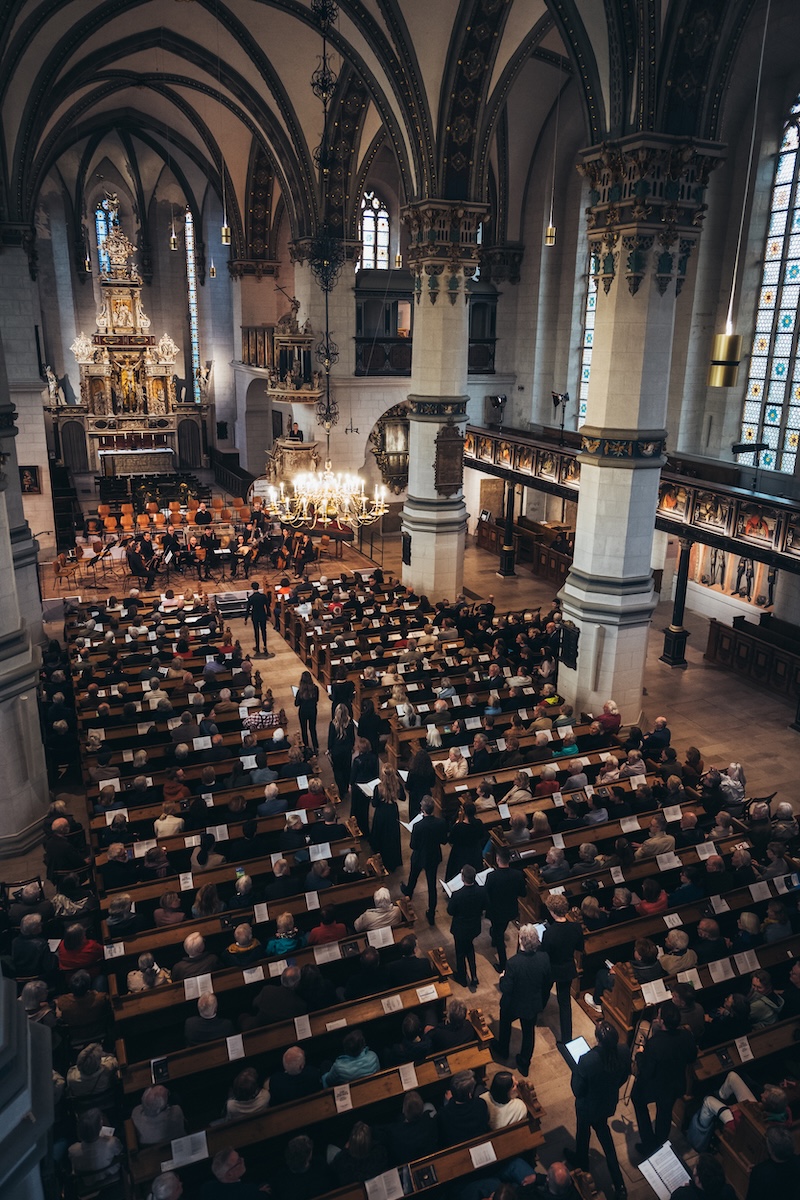
“By the seventeenth century, musical works were already circulating throughout Europe. The libraries of German courts and churches housed Monteverdi’s madrigals, the great Venetian sacred masterpieces and Roman polyphonic collections. At the same time, the Thirty Years’ War profoundly reshaped the German lands and transformed their musical landscape.
It is within this context that the programme imagines the journey of a young German musician unable to leave his own town, yet longing to hear the world.
Vertigo is born of this dual reality: the vertigo of an ever-expanding musical world, and that of a society haunted by the memory of war. On the one hand, the polychoral architecture, spatial effects and sonic splendour inherited from Venice; on the other, more intimate forms—small sacred concertos, lamenti and prayers—emerging from a world left fragile.
The programme unfolds as a set of imaginary Vespers. Without seeking historical reconstruction, it follows a shared horizon: that of an age of hope, sustained by the memory of the past and by the determination not to repeat the tragedies that had marked these generations.” (Raphaël Pichon)
Programme
Invitatoire
Michael Praetorius (1571–1621), Intrada
Samuel Scheidt (1587–1654), Surrexit Christus hodie (SSWV 18)
Michael Praetorius, Hallelujah! Christ ist erstanden
Francesco Corteccia (1502–1571), Alleluia (plain-chant et faux-bourdon)
Psaumes et antiennes
Psaume I
Chiara Margarita Cozzolani (1602–1678), Dixit Dominus à 8
Concertos
Heinrich Schütz (1585–1672), O Jesu, nomen dulce (SWV 308)
Heinrich Schütz, Saul, Saul, was verfolgst du mich? (SWV 415)
Antienne
Francesco Corteccia, Bonum est confiteri Domino (plain-chant et faux-bourdon)
Concertos
Ignazio Donati (1570–1638), Dulcis amor Jesu à 5
Heinrich Albert (1604–1651), Sinfonia à 5
Psaume II
Hieronymus Praetorius (1560–1629), Laudate Dominum à 8
Psaume III
Giovanni Antonio Rigatti (1613–1648), Nisi Dominus à 3
Concerto
Claudio Monteverdi (1567–1643), Adoramus te Christe à 6 (SV 289)
Psaume IV
Heinrich Schütz, Danket dem Herrn, denn er ist freundlich (SWV 32)
Doxologie
Francesco Corteccia, Gloria Patri (plain-chant et faux-bourdon)
Prières
Giovanni Pierluigi da Palestrina (1525–1594) / Giovanni Battista Bovicelli (v. 1549–1614), Ave verum corpus
Claudio Monteverdi, Salve Regina à 2 (SV 284)
Claudio Monteverdi, Fili mi, Iesu Christe à 5 (SV 96)
Samuel Scheidt, Courant Dolorosa à 4 (SSWV 47)
Claudio Monteverdi / Ambrosius Profe (1589–1661), Herr, schweige nicht so (SV 147)
Magnificat (pasticcio élaboré par Raphaël Pichon à partir d’œuvres de Praetorius, Cavalli, Schütz et Monteverdi)