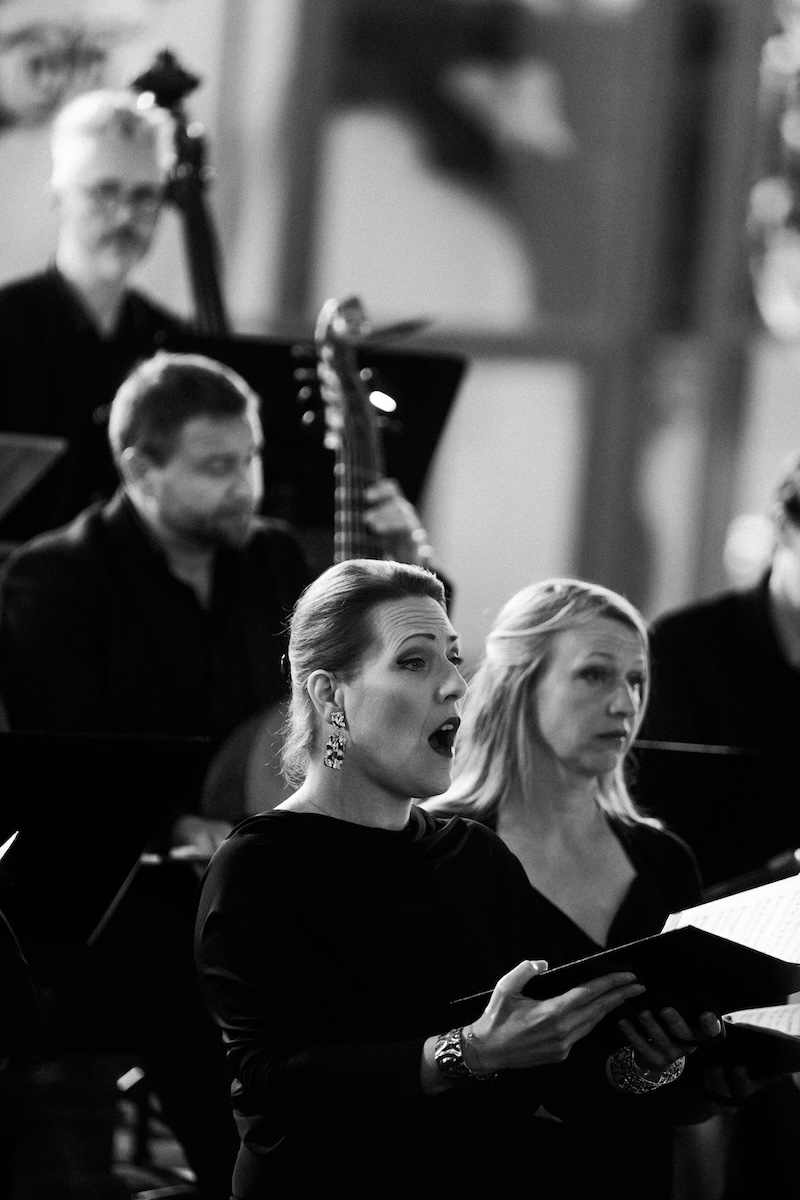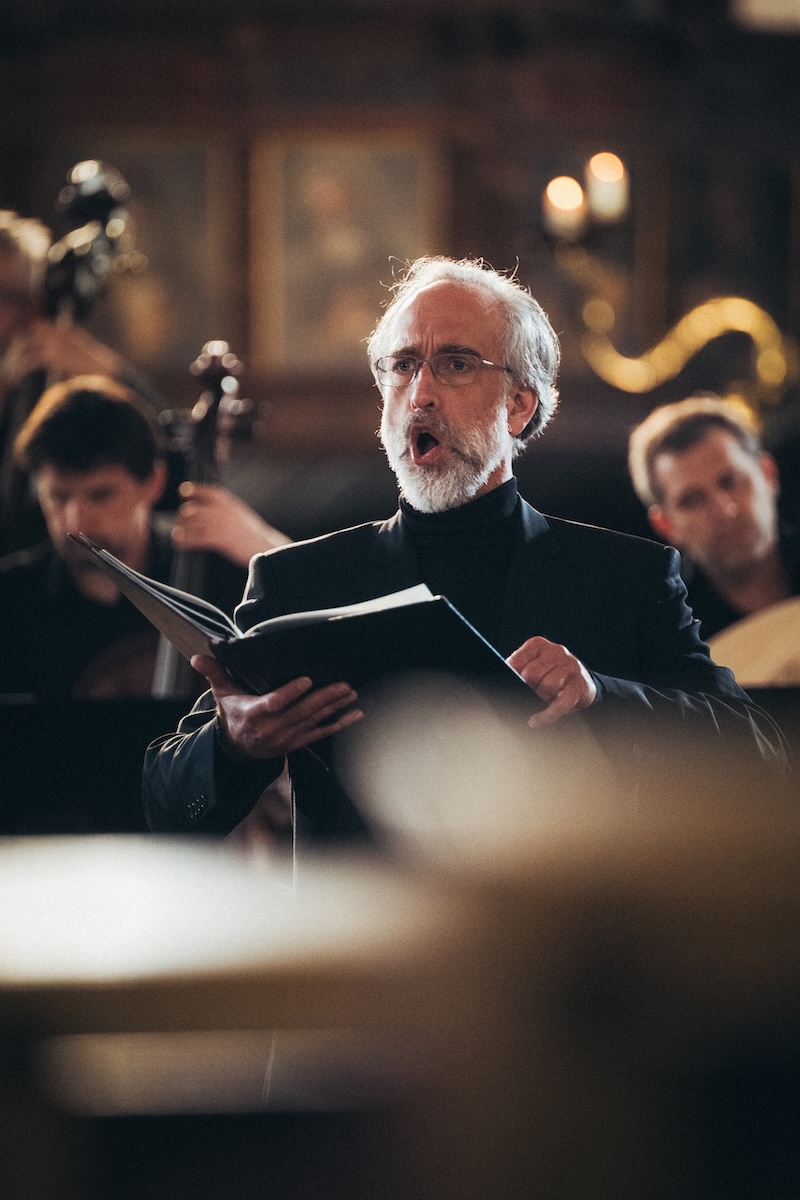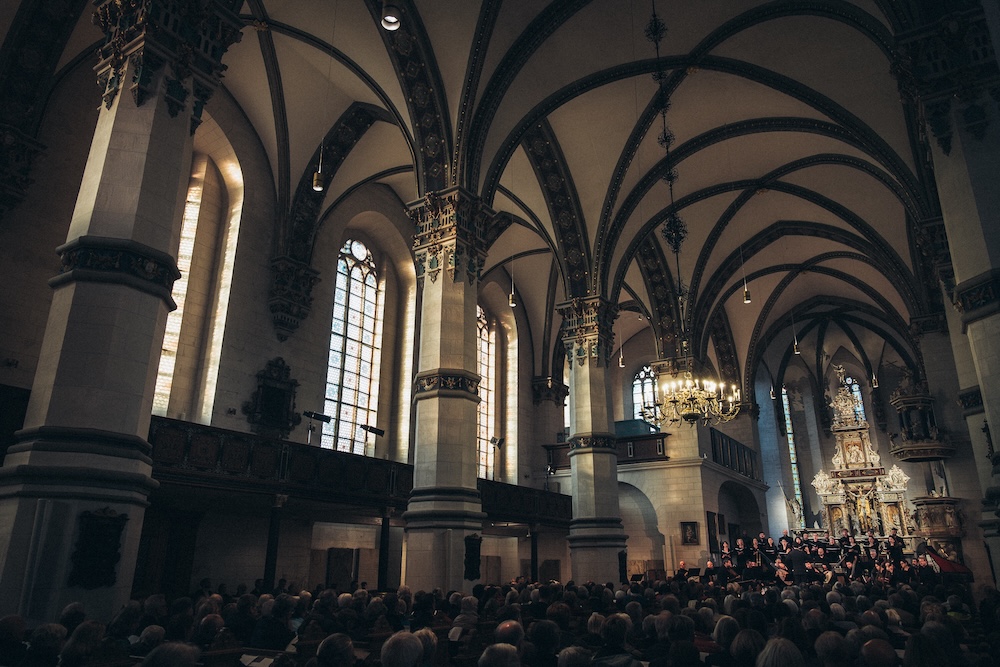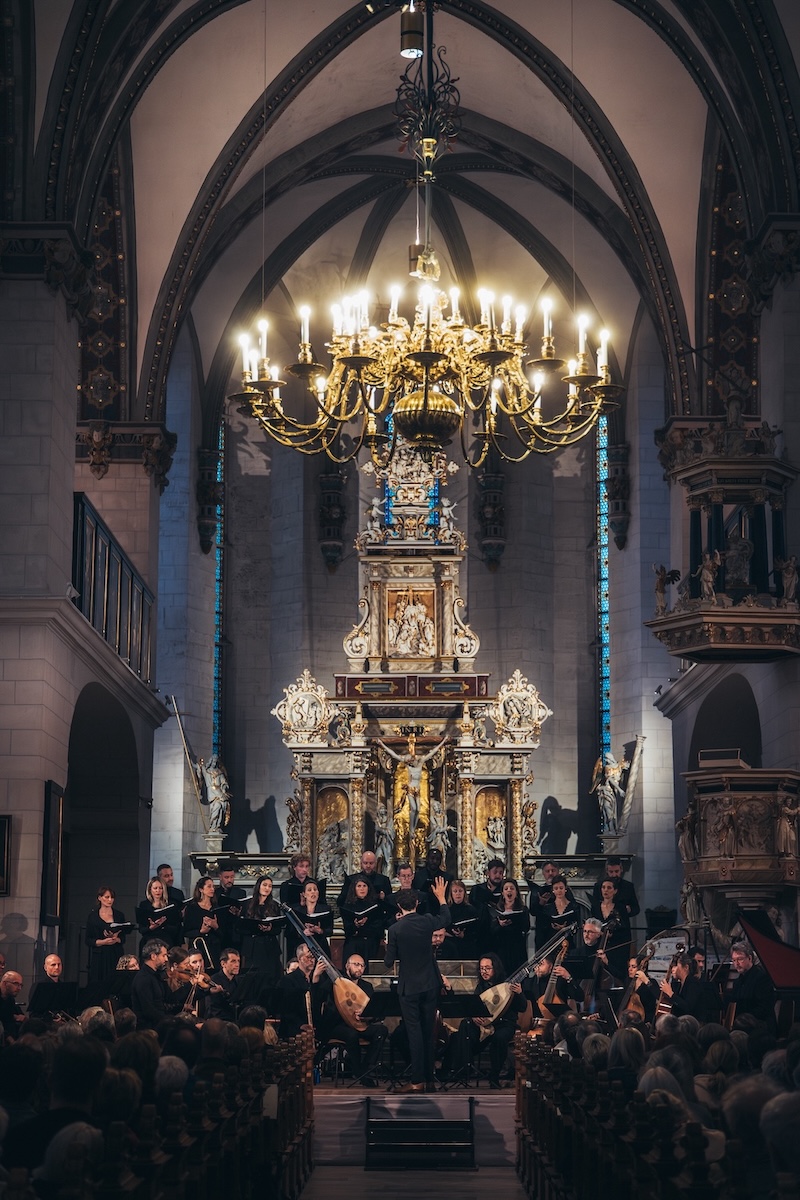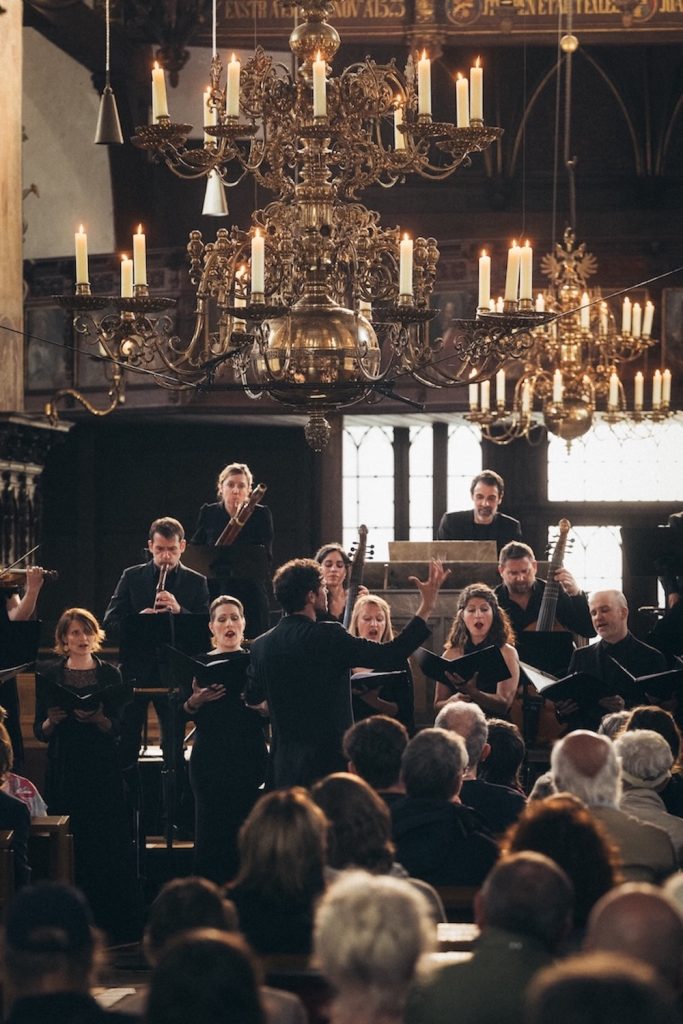
Composed in 1680 to a text by Arnulf of Louvain (13th century), Dietrich Buxtehude’s Membra Jesu Nostri is a cycle of seven cantatas devoted to the body of Christ on the Cross. Unique in the 17th-century repertoire, the work is distinguished by its austere yet deeply thatrical style : each cantata meditates on one of the wounds of the crucified Christ, progressing from the feet to the face, and places the listener at the foot of the cross, in direct relation to the suffering Christ.
The Membra Jesu Nostri cantatas invite us to contemplation and reflection and are thus part of the Lutheran spirituality of the post-Thirty Years’ War period when music became an opportunity for an experience of the sacred that was both individual and deeply embodied.
Programme
Johann Christoph Bach (1642-1703), Mit Weinen hebt sich’s an
Dietrich Buxtehude (1637-1707), Membra Jesu Nostri
Cantata I – Ad Pedes ; Cantata II – Ad Genua ; Cantata III – Ad Manus
Johann Hermann Schein (1586-1630), Threnus
Dietrich Buxtehude (1637-1707), Membra Jesu Nostri
Cantata IV – Ad Latus ; Cantata V – Ad Pectus ; Cantata VI – Ad Cor
Johann Kuhnau (1660-1722), Tristis est anima mea
Dietrich Buxtehude (1637-1707), Membra Jesu Nostri
Cantata VII – Ad Faciem
Heinrich Schütz (1585-1672), Selig sind die Toten, SWV 391
Dietrich Buxtehude (1637-1707), Herzlich lieb hab ich dich, o Herr, BuxWV 41
Dates