Köthener Trauermusik, BWV 244a
Johann Sebastian Bach
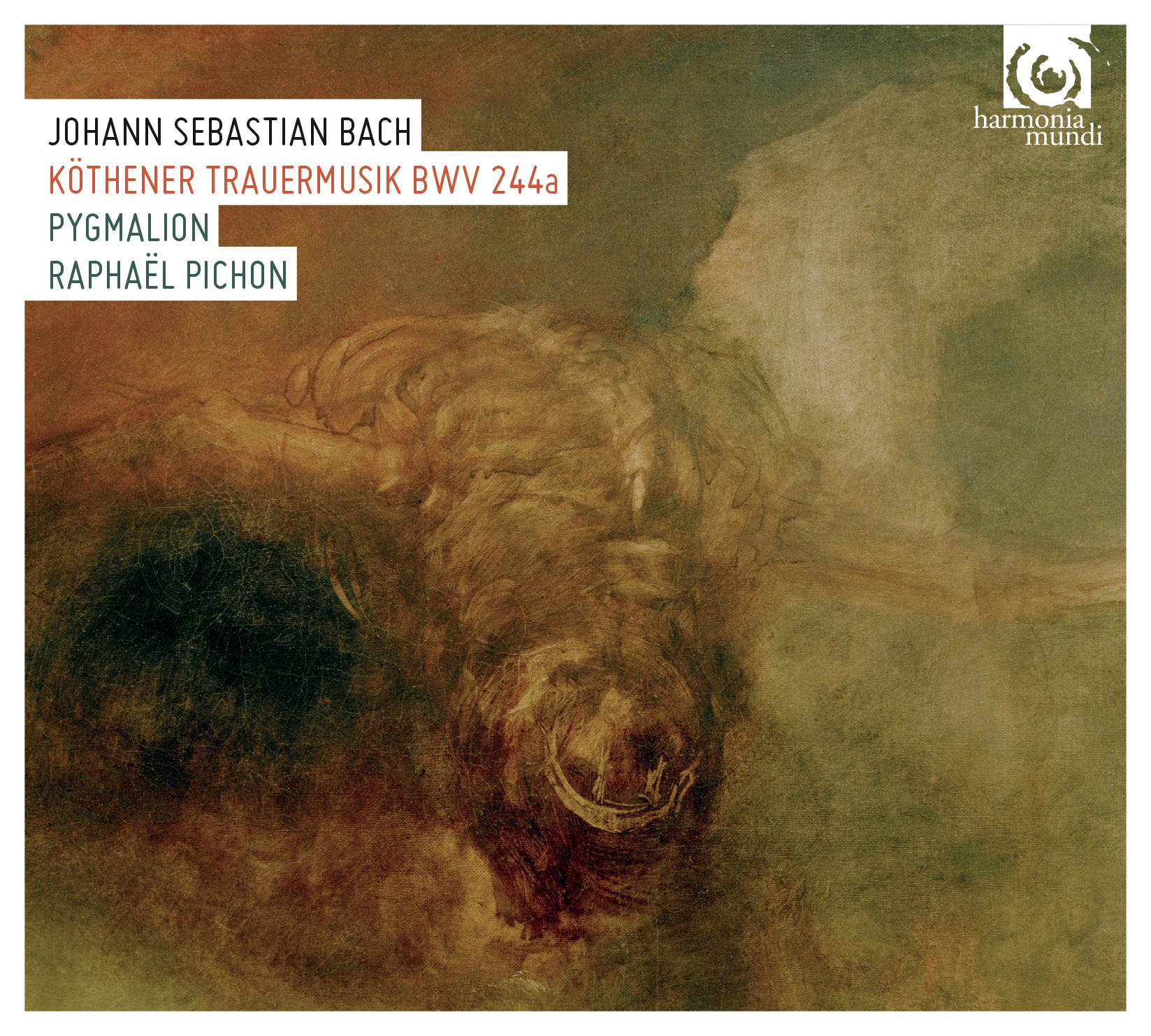
When Leopold of Anhalt-Cöthen died in 1728, his former Kapellmeister had not forgotten the five brilliant years he had spent in the prince’s service. He dedicated to his memory a mourning cantata almost entirely based on the music of two major works of the mid-1720s, the Trauer-Ode and the St Matthew Passion. Although the score is lost, the wordbook and other sources of information have now made it possible to reconstruct the work. In his first recording for harmonia mundi, Raphaël Pichon invites us on an exciting musical treasure hunt.
harmonia mundi, 13 October 2014.
1 CD – 1h13.
Awards



La presse en parle
‘For Pygmalion’s first disc on Harmonia Mundi – following a series of Bach recordings for Alpha, few in number but perfectly accomplished – Raphaël Pichon turned to a work whose music has been lost but which can, to a large extent, be reconstructed from written sources dating from the late 1720s. The funeral music for Prince Leopold is thus mainly taken from the Trauer Ode and the St Matthew Passion.’ (Jonathan Freeman-Attwood, 2014)
‘For beyond the intellectual satisfaction provided by this judicious musicological approach, the resulting musical performance deserves nothing but praise. The homogeneity of the Ensemble Pygmalion’s instrumentalists and the roundness of their timbres are perfectly highlighted here by the conductor’s ideally supple and rhythmic direction: there is no unnecessary languor here, but on the contrary a constantly recalled pulse, even in the darkest passages, thanks in particular to a discreet and effective continuo. These qualities are also found in the choir, which is of ideal size, impeccably flexible and immaculately pitched.’ (Julien Marion, 2014)
‘The choir delivers a jubilant, lively, theatrical performance that emphasises the text. Raphaël Pichon opts for a discreet continuo that allows the listener to fully appreciate the dizzying contrapuntal writing of the choral parts. The recording also benefits from magnificent sound engineering (Hugues Deschaux) and interesting commentary by Raphaël Pichon in the booklet, particularly on his close relationship with these motets.’ (Jean-Baptiste de La Taille, 2020)
The choir and musicians are united in a single momentum. The soloists are outstanding: the luminous Sabine Devieilhe, the highly eloquent Damien Guillon, Christian Immler with his noble timbre… (J.S., 14 November 2014)